For a small interior design practice, professional CGI can be highly valuable even when it is only needed occasionally. Larger design teams often outsource for capacity, specialist output or presentation quality, while smaller practices tend to use external CGI as a way to access the same level of specialist production without building that capability internally. We look at the larger-team perspective in our companion article on CGI outsourcing for design and build businesses. The requirement may only appear several times a year, yet the quality of those few images can carry considerable value. In that situation, external visualisation gives a small practice access to specialist production whenever the project warrants it. Specialist quality without building a permanent CGI function Producing consistently strong imagery involves far more than having access to 3D software - it requires an understanding of lighting, materials, composition, modelling and image production, developed through repeated use. For designers who need high-quality CGI only occasionally, outsourcing provides direct access to specialist expertise without requiring an ongoing internal setup. It keeps the practice focused on design while making professional visualisation available whenever a project calls for it. Small practices can access the same visual standard as larger teams One of the advantages of outsourcing specialist production is that access to quality is not determined by the size of the design practice. Independent designers can have the same level of specialist visualisation as much larger companies, which can significantly strengthen how their work is presented. This is especially valuable when pitching for larger commissions or helping clients understand a proposal with greater confidence before moving forward. Keeping the designer's time focused on the project Small practices often operate with very little separation between design, client communication and project management, where the same person is responsible for developing the concept, preparing documentation and managing the relationship with the client. Adding detailed CGI production to that workload would consume a disproportionate amount of time, especially when visualisation is not part of the studio's everyday workflow. An external CGI partner allows the designer to direct the visual outcome while keeping the technical production elsewhere. Working with the information a small practice already produces A designer does not need to restructure the entire way they work in order to outsource visualisation. A CGI studio can usually develop the imagery from the same information used during the design process, provided the brief contains enough detail to communicate the intended scheme. That may include drawings, existing models, references, sketches, material selections and other project information - the exact combination will vary according to the project. An experienced CGI artist will easily understand that information and translate the design into a coherent visual result. Giving clients a clearer understanding of the proposal CGI is especially useful when the designer and client have very different levels of spatial literacy. Design professionals are accustomed to understanding plans, elevations, materials and references as parts of a complete space. Private clients often need a more immediate way of seeing how those different elements will work together. A well-produced visualisation gives both sides a shared reference. It can make discussions around the proposal more precise and allow the client to understand the intended result before physical work begins. That can be particularly helpful on projects involving a high level of personal decision-making, where confidence in the design plays an important role in approvals. The value of the image is therefore practical as well as presentational. A small number of images can have a long working life For a compact studio, each professionally produced image can carry substantial value beyond the project for which it was originally commissioned. The imagery may later support the studio's portfolio, website, social media presence, future proposals or editorial submissions. That gives the visualisation a longer lifespan than the initial client presentation. For practices commissioning CGI only occasionally, this can make quality especially important. A relatively small collection of strong images can become a significant part of how the business presents its work publicly. Choosing a partner who fits a small practice The practical relationship with the CGI studio becomes particularly important when the designer is also the person managing the outsourcing process. There may be very little spare time available for detailed supervision. A good partner should therefore be able to understand design information confidently, ask useful questions at the right stage and manage the technical side of production independently once the direction has been established. Clear communication also matters because the designer needs visibility over progress without being drawn deeply into the mechanics of rendering. The ideal outcome is a process that gives the practice access to specialist expertise while keeping the additional management burden low. Staying focused while expanding what the practice can deliver Small design businesses often benefit from keeping their permanent structure focused. External specialists allow them to expand their capabilities on a project-by-project basis without changing the nature of the practice itself. CGI is particularly well suited to this model because the need can vary so widely. Some projects can be communicated effectively without it, while others benefit enormously from a strong visual presentation. Outsourcing allows the designer to make that decision according to the needs of each project. The practice remains compact and focused, while its access to specialist production extends much further. For an independent designer, that can be one of the most practical advantages of working with a professional visualisation studio Need professional CGI without building the capability in-house? Visioaxis works with independent designers and small practices that need high-quality visualisation for selected projects, presentations and client approvals. Talk to us about your project
Read more 
For established design and build companies, architectural practices and workplace design teams, CGI outsourcing is often driven by four things: the visual standard a project requires, access to specialist output, pressure on internal capacity and the uneven demand for visualisation across the year. All four tend to become more important at the same point in a project, when a scheme is approaching presentation stage and the quality of its communication suddenly carries commercial weight. A design team may already have capable 3D users internally. The question is how much time and specialist attention a particular presentation deserves, and whether the internal team has enough room to give it that attention alongside everything else happening on the project. This is where a professional visualisation studio becomes useful. Smaller practices face a different version of the same decision, which we explore in our companion article on CGI outsourcing for independent designers and small studios. When the project requires a higher visual standard The visual requirements of a project can change substantially depending on where and how the imagery will be used. A quick internal render may communicate enough for design development, but a competitive pitch, tender or major client presentation places a different level of responsibility on the image. The CGI has to communicate the proposal clearly while supporting the quality and credibility of the wider presentation. That level of production depends on a series of specialist decisions around lighting, composition, material definition, modelling and image balance. A visualisation studio works with them continuously, across many projects and many types of spaces. That concentration of experience gives the studio a specific role within the wider design process, so while the designer defines the scheme, the visualisation specialist concentrates on how convincingly that scheme is communicated. For an important presentation, the distinction can make a noticeable difference. Access to specialist output when the project calls for it The visual requirements of commercial projects can also extend beyond the team's everyday workflow. A company may occasionally need animation, interactive 360º visualisation, a larger coordinated CGI package or another form of presentation that requires specialist production knowledge. Maintaining every possible visualisation capability internally can be difficult to justify when the demand varies significantly between projects. An external studio gives the business access to a wider production toolkit when the brief requires it. The internal workflow can remain focused on the services it uses regularly, while more specialised requirements are handled by people who already have an established process for producing them. This creates a useful balance between internal capability and external expertise. Managing uneven CGI demand One of the biggest challenges for larger design businesses is the inconsistency of visualisation workload. CGI demand follows project programmes, tender schedules and client deadlines, which means it tends to arrive in peaks. Several schemes may require presentation imagery at the same time, followed by a much quieter period. Permanent staffing has to accommodate that variation somehow. External visualisation capacity gives companies more flexibility around those peaks. The internal team can cover its regular workload while an established CGI partner takes on additional production when several projects converge. This becomes particularly valuable in D&B environments, where the pressure is rarely limited to visualisation alone. Presentation work is developing alongside design coordination, pricing, specifications and client communication. Additional CGI capacity therefore creates room elsewhere in the project team as well. Working against fixed deadlines while the scheme develops Visualisation sits relatively late in the design process because it depends on enough information being available to represent the proposal accurately. At the same time, the design can continue evolving throughout the CGI programme. Different elements may still be under review, and client feedback can keep influencing the scheme while the presentation date remains fixed. This reduces the production window. An external CGI team allows design development and visual production to progress in parallel. The internal team continues resolving the project while the visualisation studio works from the latest information and incorporates agreed changes as the scheme develops. This is especially useful during competitive pitches, where presentation quality matters and the time available to achieve it is often compressed. Using internal design time where it creates the most value Many experienced designers can produce strong visualisations themselves. Their time, however, carries several competing priorities. When a designer is responsible for developing the scheme, coordinating decisions and preparing for client discussions, several days of detailed rendering can have a significant effect on the wider programme. Specialist outsourcing allows the internal team to retain full creative direction while moving the technical production of the imagery to a dedicated resource. The value comes from specialisation on both sides. The design team remains focused on the scheme and the CGI studio remains focused on its visual communication. A CGI partner should make the process lighter The quality of the outsourcing relationship matters as much as the quality of the final image. A visualisation partner has to understand the type of information that design teams actually work with and turn it into a coherent production process. That information is rarely contained in one perfectly prepared file. It usually arrives through a combination of models, drawings, references, mark-ups and ongoing direction. A professional studio should be comfortable working with that mixture and should recognise where clarification is required before it becomes a problem later in production. This is an important part of specialist expertise. The value of outsourcing increases when the CGI team can interpret architectural information confidently, anticipate common gaps and manage its own part of the process with minimal friction. Why proven visualisation partners become more valuable over time Repeat collaboration changes the efficiency of the relationship. After several projects, the visualisation studio begins to understand how the company communicates design, how its teams structure briefs, what level of realism it prefers and how its approval process usually works. That accumulated knowledge shortens the distance between receiving a project and producing useful work. It also gives the design business a dependable source of additional capacity. When a project suddenly requires more imagery or a pitch programme tightens, there is already a team that understands the company's expectations. The outsourcing relationship starts to function as part of the company's wider production capability. Visual quality still depends on accuracy Presentation quality is important because CGI often represents a proposal before the space exists. That makes accuracy equally important. The image needs to communicate the intended scale, spatial relationships, materials, lighting and overall design direction with enough discipline that the viewer can rely on what they are seeing. The strongest architectural visualisation achieves both objectives at once. It presents the scheme convincingly while remaining faithful to the information behind it. This matters particularly in commercial interiors, where CGI can influence client decisions, tender outcomes and expectations for the finished project. Visualisation works best when aesthetics and accuracy reinforce each other. CGI outsourcing as part of a wider production strategy For established design businesses, outsourcing offers access to specialist quality, a broader range of visual outputs and flexible capacity at the points where demand increases. The strongest relationships go beyond individual rendering commissions. A proven CGI partner becomes a specialist resource that can be introduced whenever the project requires a higher production standard or additional capacity, while the internal team maintains ownership of the design and client relationship. That is where outsourcing creates the most value. It expands what the team can deliver without requiring every specialist capability to exist permanently inside the business. Looking for a reliable CGI outsourcing partner? Visioaxis works with design teams that need specialist visualisation, additional capacity or a consistently high presentation standard across projects. Talk to us about your next project
Read more 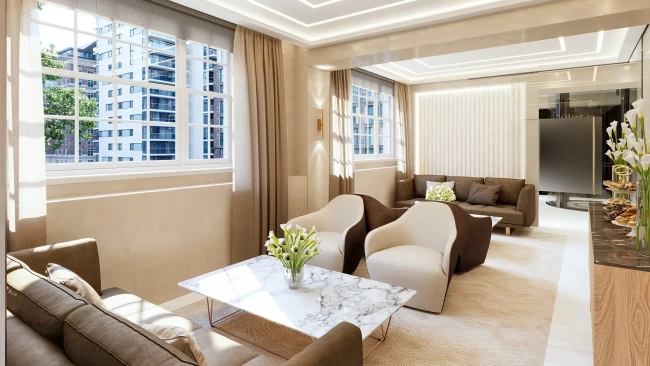
Architectural visualisation is often judged by how convincing an image looks. Lighting, materials, composition and atmosphere all matter. For workplace projects, however, a render also has a more practical job: it should help the design team understand whether the proposed space works as intended. A carefully selected camera position can make a room appear more generous, wide lenses can exaggerate space, and lighting and styling can draw attention towards the strongest parts of a scheme. These are all legitimate tools in architectural visualisation, but they should communicate the design clearly rather than compensate for weaknesses in it. For teams using 3D visualisation for office interior design , this distinction can make CGI useful well before the final presentation stage. One hero image only tells part of the story A workplace is never experienced from one perfect viewpoint. People move through reception areas, circulation routes, workstations, meeting rooms, tea points and breakout spaces. A design that works beautifully from one angle still needs to remain convincing as those spaces connect. This is why, rather than a single hero image, a design proposal often times requires a series of workplace interior CGI visualisations . Alternative views can show whether furniture density works, whether materials sit comfortably together, whether a feature has the intended visual weight or whether two neighbouring areas remain coherent. Some of the most useful images may actually be the less dramatic ones, like a view across an open-plan workspace, the transition into a breakout area, an so on. CGI brings separate design decisions together During design development, much of the overlapping elements like furniture, lighting, finishes, etc. exist separately across drawings, specifications, samples and reference imagery. Architectural 3D visualisation for commercial interiors brings those decisions into the same visual context. That can expose relatively small issues before they become larger ones. A colour that works well on a sample may dominate once applied across a large surface. A ceiling feature may compete with the furniture underneath it. CGI therefore has value beyond making a proposal presentable. It gives the team another opportunity to evaluate the design before construction. Accuracy matters as much as presentation Workplace CGI is frequently created for pitches, tenders, approvals and client presentations, so the images naturally need to communicate the scheme attractively. The strongest realistic architectural renders for client presentations , however, remain faithful to the proposed space. Camera position, lighting and styling should help the viewer understand the design. Proportions should remain believable. Materials should respond realistically to light. Furniture and architectural elements should relate to one another in a way that reflects the actual proposal. A successful render gives a client confidence because the design has been communicated clearly, rather than because the image has carefully avoided everything difficult about the space. CGI outsourcing works best as part of the design workflow The same principle matters when a design studio chooses to outsource CGI for interior design projects . The visualisation team needs more than a model and a request for an attractive image. Understanding what each view is intended to communicate leads to better decisions about composition, lighting and level of detail. One image may establish the overall atmosphere of a workplace. Another may need to demonstrate how two zones relate to each other. A third might focus on a particular material combination, ceiling treatment or branded feature. For design and build companies and interior design studios working across several live projects, an external CGI partner can also provide additional visualisation capacity when deadlines overlap. The smoother the studio can work with existing models, drawings, specifications and feedback processes, the more useful that relationship becomes. The objective should be simple: CGI should make the proposed workplace easier to understand, assess and present. A useful render should withstand scrutiny There will always be a place for the hero image. It is often the first impression of a project and needs to communicate its character quickly. A strong CGI package should also hold together beyond that first view. Looking at the workplace across several perspectives gives designers and clients a better understanding of how individual decisions relate to the wider scheme. It can confirm that the design works as planned, or reveal something worth adjusting while there is still time to do so. Good architectural visualisation should make a strong design look good. More importantly, it should show why it works. FAQ Can an external CGI studio work alongside an in-house design or visualisation team? Yes. Interior design and design-and-build studios often use an external CGI partner when several deadlines overlap, a pitch requires additional visualisation capacity, or the internal team needs help with specific deliverables. The external studio can work within the existing design workflow and produce still images, animations or 360° virtual tours as required. Can CGI be outsourced for individual workplace projects rather than on a long-term contract? Yes. Architectural visualisation can be outsourced on a project-by-project basis, which is useful for studios with fluctuating workloads. An external CGI studio can step in for a single pitch, a set of workplace renders or a larger commercial interior project without the need for permanent additional resource. What types of workplace CGI can be outsourced? Workplace CGI outsourcing can include photorealistic interior renders, multiple presentation angles, close-up views, animations, 360° virtual tours and 3D floor plans. These can support office fit-out pitches, client presentations, design development, approvals and real estate marketing. What files do I need to provide for 3D rendering? Most CGI studios can work from a combination of floor plans, elevations, sections, CAD drawings or existing 3D models, together with material specifications, furniture information and reference imagery. The requirements vary depending on the project and its stage, so a complete 3D model is not necessarily required before approaching a studio for a quotation or discussing the scope.
Read more 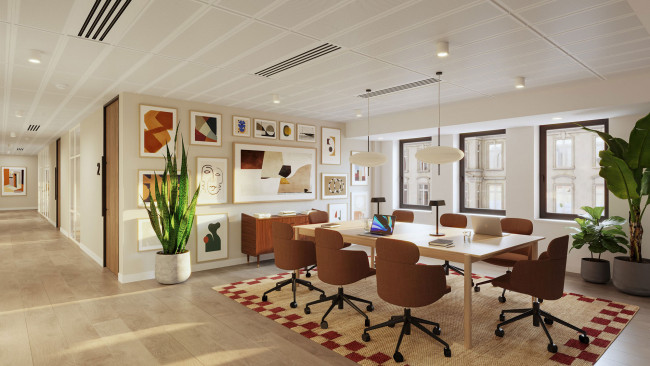
Workplace visualisations allow design and build teams to present an office interior design accurately before construction or fit-out work begins. Floor plans, elevations, mood boards and material samples remain essential parts of the design process. However, they often require clients to imagine how numerous separate elements will be combined inside the completed workplace. A detailed workplace CGI gathers the proposed layout, furniture, lighting, materials, finishes and architectural features within one coherent image. This gives everyone involved in the project a better understanding of the design and creates a shared reference for feedback, approvals and further development. This guide answers some of the most common questions surrounding corporate visualisations and explains how CGI can support projects across the design and build industry. AG Barr workplace designed by Coda workspace | CGI by Visioaxis What is workplace visualisation? Workplace visualisation is the process of creating three-dimensional images, animations or interactive experiences that show how a proposed office interior is expected to look. The CGI is usually produced using information supplied by the project team, such as floor plans, elevations, sections, furniture schedules, lighting specifications, material references and branding guidelines. These separate sources are translated into a visual representation of the completed corporate space. 3D workplace visualisations can cover almost every area of a commercial office, including: Reception and entrance areas Open-plan workspaces Meeting and conference rooms Breakout spaces Tea points and office kitchens Collaboration areas Private offices Staff cafés and restaurants Wellness rooms Terraces and external amenities There are different stages of a project which define the purpose of the CGI. An early office visualisation may help establish the design direction, while a more developed image may be used for client approval, a tender presentation or commercial marketing. Accurate workplace CGI reflects the specific layout and design decisions made for the project. Furniture placement, lighting, materials and architectural details can all be coordinated to create a credible representation of the proposed interior. What are the benefits of workplace visualisation? Office fit-out projects combine technical, creative and commercial decisions. While the design team may be comfortable reading plans and specifications, other stakeholders may find it difficult to understand how those documents translate into a finished environment. A workplace visualisation makes the proposal easier to understand. Instead of relying on different individual interpretations of the drawings, designers can communicate their intentions with greater precision, while projct teams can discuss specific areas. Workplace CGI can also help teams: Communicate complex office designs Gain feedback from non-technical project partners Compare materials, layouts and furniture options Identify visual or spatial concerns early on Strengthen pitches and tender submissions Create consistent imagery across presentations Market office space before completion Reduce misunderstandings surrounding the approved design Present projects that are not yet ready to photograph The value of CGI really shines when several people are involved in the approval process. Instead of asking each partner to imagine the proposed interior independently, the team can discuss one shared visual reference. Dains accountants workplace designed by Oktra | CGI by Visioaxis How much does workplace CGI cost? The cost of workplace CGI depends on the scale, complexity and requirements of the project. There is no single price that applies to every office visualisation. A relatively simple meeting room produced from an existing 3D model will require a different amount of work from a complete office floor that must be modelled from drawings. If your team is planning a workplace CGI project, share a few details about the scope and requirements through our project enquiry form , and we’ll happily get back to you with a quote shortly. The main factors affecting workplace visualisation costs include: The number of images required The size and complexity of the space Whether a usable 3D model already exists The level of detail within the interior The amount of bespoke furniture or joinery The quality and completeness of the source information The number of design options being explored The required output resolution The number of revision stages The project deadline Whether animation or a 360-degree tour is required A clear brief makes it easier for a CGI studio to prepare an accurate quotation. The brief should explain what needs to be visualised, how many views are required, what information is available and how the final images will be used. When comparing quotations, the lowest price may not represent the best value. The ability to interpret drawings accurately, respond to design changes and deliver consistent images within the project programme is equally important. For design and build teams, unreliable visualisation work can create additional coordination, delays and revisions. A suitable workplace CGI partner should therefore be assessed on its relevant experience, communication and ability to work within an active design process. How long does workplace visualisation take? The timeframe for producing workplace visualisations varies according to the project. A single room based on complete information may progress quickly. A larger office with several viewpoints, bespoke design features and incomplete specifications will require more development and coordination. The programme is normally influenced by: The number of views The size of the workplace The complexity of the design Whether modelling is required The availability of drawings and references The number of people providing feedback The extent of revisions The required image quality and resolution The final deadline The process usually includes an initial information review, 3D modelling, material and lighting development, camera selection, preview production, feedback and final rendering. Design and build projects often move quickly, so the workplace CGI programme should be considered alongside the wider presentation or tender deadline. Allowing time for review is important. Even a technically accurate visualisation may require adjustments to the atmosphere, furniture, lighting or composition before it is ready for presentation. Providing information in an organised way can significantly improve efficiency. Clearly labelled drawings, material references and consolidated feedback allow the visualisation team to focus on production rather than repeatedly searching for missing decisions. What information is needed to create office CGI? The accuracy of office CGI depends heavily on the information supplied at the beginning of the project. Useful source material may include: Floor plans Reflected ceiling plans Elevations and sections Furniture layouts Furniture schedules Lighting specifications Material and finish schedules Joinery drawings Product references Existing site photographs Sketches and mood boards Examples of the desired visual atmosphere A complete technical package is helpful, but it is not always necessary for every element to be final. Workplace projects frequently develop while the visualisations are being produced. In these cases, the CGI team needs to understand which decisions are confirmed, which remain under review and where some interpretation may be required. The intended use of the images should also be explained. A visualisation created to test workstation density may require a different approach from an image intended to introduce the design during a client presentation. A tender image may need to communicate the overall concept quickly, while a marketing image may place greater emphasis on atmosphere and broader commercial appeal. Clear priorities help the CGI studio select suitable viewpoints and direct attention towards the details that matter most. Contemporary London workplace | CGI by Visioaxis What is the difference between CAT A and CAT B CGI? CAT A and CAT B CGI represent different stages and types of commercial office fit-out. A CAT A office usually includes the fundamental finishes and building services required to make a space suitable for a future occupier. The exact specification varies, but it may include ceilings, lighting, raised floors, mechanical systems, basic wall finishes and common areas. CAT A CGI is commonly used to demonstrate the quality, scale and potential of an office floor before it has been fitted out for a specific tenant. It can help property teams and prospective occupiers understand an empty space that may otherwise appear difficult to interpret from photographs or plans. CAT B CGI shows a workplace that has been developed around the requirements of a particular occupier. It may include: Workstations Meeting rooms Breakout areas Tea points Kitchens Furniture Feature lighting Acoustic treatments Branding Decorative finishes Bespoke joinery CAT B visualisations are frequently used during workplace design development, client approvals, tender presentations and project communication. The key distinction is the level of fit-out and personalisation being represented. CAT A CGI communicates the base space and its potential, while CAT B CGI presents a more complete workplace designed around the people and organisation that will use it. How does workplace CGI help with client presentations and approvals? Workplace CGI helps clients understand design proposals without requiring them to interpret a complete set of technical drawings. They can assess the scale of the room, the balance of colours and materials, the relationship between furniture and architecture, and the overall atmosphere of the proposed interior. This can lead to more precise feedback. A stakeholder may identify that the lighting appears too cool, a particular finish feels dominant or the furniture arrangement seems too dense. Specific feedback is easier for the design team to interpret and address. CGI is also useful when final approval depends on senior decision-makers who have not followed every stage of the project. A carefully selected set of images can communicate the main design decisions quickly without requiring the audience to review the entire technical package. This creates an additional layer of communication that makes those decisions more accessible. Can workplace visualisation help design and build companies win tenders? 3D workplace visualisation can make a design and build tender more convincing by showing how the proposed concept responds to the client’s brief. During a competitive pitch, the project team may have limited time to communicate a large amount of information. The audience must understand the design direction, workplace strategy, material palette and intended atmosphere within a relatively short presentation. A strong set of workplace visualisations can connect these elements immediately. Consistency is especially important - when several visualisations are included within a pitch, they should feel like different parts of the same workplace. Lighting, materials, furniture and image quality should remain coordinated across the complete set. Workplace CGI cannot compensate for a weak design or incomplete proposal. It can, however, help a strong concept communicate more effectively. For companies with internal visualisation teams, an external CGI studio can also provide additional capacity during busy tender periods. This can be useful when several images are required within a short programme or when the internal team is already committed to other projects. What types of workplace visualisation are available? Workplace visualisation can be produced in several formats depending on the project, audience and platform. Photorealistic still images Still CGI images are the most widely used format for workplace presentations. They provide a high level of control over viewpoint, composition, lighting and detail. Still images can be used in tenders, design presentations, brochures, websites, case studies and social media content. Close-up visualisations Close-up images focus on specific details such as furniture, material junctions, lighting features or bespoke joinery. They are useful when important design elements are difficult to appreciate in wider views. 360º VR tours A 360-degree workplace visualisation allows the viewer to explore a room or office area interactively. 360 virtual tours can help clients understand spatial relationships and see more of the proposed environment than a fixed camera view can show. CGI animations and walkthroughs Animations demonstrate movement through the workplace and can communicate how different areas connect. They can be used for major presentations, leasing campaigns, property marketing and online content. Animated presentations An animated presentation combines workplace CGI with controlled camera movement, text, graphic elements and branding. This can provide a concise way to present several images as part of a pitch, project launch or digital campaign. Day and evening variations Different lighting conditions can show how the workplace atmosphere changes throughout the day. This may be particularly relevant for reception areas, hospitality-inspired office spaces, terraces and client-facing environments. The appropriate format should be selected according to the communication objective. A large number of deliverables does not automatically improve a presentation. A focused selection of suitable views is usually more effective. Chatwin Building Workplace designed by Thirdway | CGI by Visioaxis How many revisions are included in a CGI project? The number of revisions included in a workplace CGI project depends on the agreement with the visualisation studio. The revision process should be established before production begins. This gives both sides a clear understanding of what is included and how feedback will be handled. At Visioaxis, our standard scope includes up to two rounds of revisions. This allows space for feedback and adjustments while keeping the process structured and aligned with agreed objectives. It is useful to distinguish between design development and correction. A correction may involve adjusting an element that does not accurately match the supplied information. A design revision may involve changing furniture, finishes, lighting or layouts after the initial image has already been produced. Both are a normal part of many workplace projects, but extensive design changes can affect the programme and cost. Consolidated feedback helps the process run more efficiently. When comments are collected from the relevant stakeholders and issued together, the visualisation team can address them within one coordinated revision stage. Where several people are involved in reviewing the CGI, feedback is most effective when it is discussed internally and consolidated by one nominated point of contact before being sent to the visualisation team. This helps prevent overlapping or contradictory instructions, creates a clear record of the agreed changes and protects valuable time within the project programme. Can workplace CGI be produced for an urgent pitch or tender? Workplace CGI can often be produced for an urgent pitch or tender, provided the scope and available information are suitable. Fast delivery depends on several factors: The number of images required The complexity of the spaces Whether a usable model exists The quality of the supplied drawings The amount of bespoke detailing The availability of material references How quickly feedback can be provided The production capacity of the CGI studio When the deadline is tight, the project team should identify which views are essential. It may be more effective to produce a smaller number of carefully selected visualisations than to attempt a large image set without enough time for development and review. Priorities should also be made clear at the beginning. If a reception and main workspace are central to the pitch, those areas can be developed first. Secondary spaces may be added if the programme allows. Rapid production does not remove the need for communication. Clear information, quick decisions and consolidated feedback become even more important when the delivery window is limited. An experienced workplace visualisation team should be able to assess the brief honestly and establish what can be delivered to an appropriate standard within the available time. How do you choose a workplace visualisation studio? Choosing a workplace visualisation studio involves more than comparing individual portfolio images. A strong CGI portfolio demonstrates technical ability, but the studio must also be capable of working within the practical conditions of a design and build project. This includes interpreting drawings, managing incomplete information, following updates and responding constructively to feedback. Relevant workplace experience is valuable because commercial office interiors have their own requirements. Workstation systems, acoustic products, meeting room layouts, lighting strategies and commercial furniture all need to be represented accurately. When assessing a potential CGI partner, consider: The quality and consistency of its workplace portfolio Its experience with office fit-out projects Its ability to interpret drawings and specifications Its communication during production Its approach to revisions Its capacity to meet presentation deadlines Its ability to maintain consistency across several images Its experience working alongside design and build teams The studio should also understand the purpose of the visualisations. An image intended for a design review requires accuracy and clarity. A pitch image must communicate the concept quickly and persuasively. A marketing visualisation may require a broader sense of atmosphere and commercial appeal. The right CGI partner should adapt its approach according to the project rather than applying the same visual formula to every brief. Workplace visualisations as part of the design and build process Workplace visualisations help design and build teams communicate office concepts before the physical space is complete. They give clients a clearer understanding of the proposal, allow design decisions to be assessed in context and provide a shared reference for feedback and approval. CGI can also strengthen tender presentations, support office leasing campaigns and give project teams access to high-quality imagery before a workplace is ready to photograph. The greatest value comes when visualisation is treated as part of the wider project process. Accurate drawings, clear priorities and organised feedback allow the CGI team to produce images that are visually convincing and genuinely useful. The result should do more than present an attractive office. It should help the audience understand the design, evaluate the proposal and make better-informed decisions. Visioaxis produces workplace visualisations for interior designers, architects and design and build companies. Our services include still office CGI, 360-degree virtual tours, animations and presentation material for pitches, tenders, design development and commercial marketing. To discuss workplace CGI for an upcoming office fit-out project, contact Visioaxis at office@visioaxis.com .
Read more 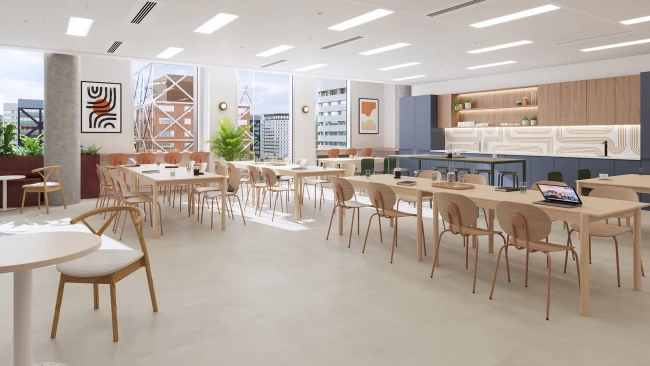
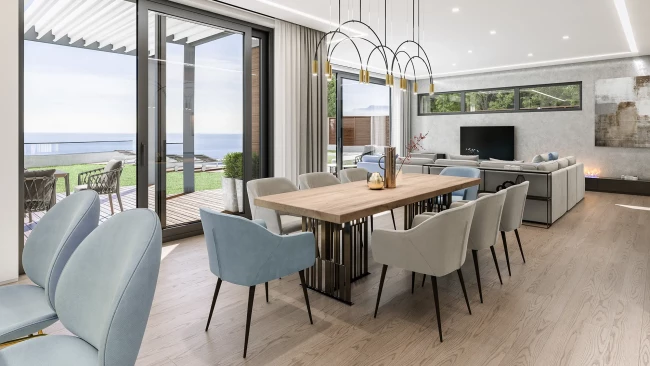
The UK real estate market has entered a highly selective, risk-conscious phase. The days of relying on property scarcity to drive quick transactions are gone for both residential developments and commercial portfolios. Today’s buyers, corporate tenants, and investors form their critical first impressions online. They are doing so against a backdrop of complex economic headwinds: average two-year fixed mortgage rates are hovering near 5.6%, residential price growth has cooled to a modest 1.5%, and transaction timelines are stretching. When deals take longer, the risk of renegotiation or collapse increases. In this climate, property marketing becomes a functional sales tool that anchors a property’s true value from day one. For property and design professionals, Computer-Generated Imagery (CGI) has evolved from a premium marketing extra into an essential framework for closing the "imagination gap." De-risking Off-Plan & Pre-Completion Sales With elevated building costs and restrictive development finance, securing early momentum on unbuilt or unfinished property is critical for cash flow. However, asking an investor or buyer to commit based only on technical drawings and material schedules is a heavy ask in a cautious market. Most struggle to translate a 2D floorplan into a lived or working environment. CGI removes this friction by presenting the final result with absolute clarity: In residential sectors high-fidelity imagery counteracts buyer hesitation by showing exactly how interiors work once furnished. This gives nervous buyers the visual and emotional reassurance they need to commit to a purchase. 3D Visualisation of a private seaside residence designed by Studio Hi | CGI by Visioaxis In commercial sectors visualisations show how speculative floorplates translate into functional environments, visualising exactly how reception zones, workstations, and breakout spaces interact to support a modern corporate culture. Instead of asking stakeholders to imagine the value, CGI gives them an immutable visual reference, shortening the sales cycle when speed to contract is crucial. Unlocking the Value of Vacant "Plug-and-Play" Spaces A defining 2026 commercial real estate trend is the shift from a simple "flight to core" to a "flight to readiness." Modern commercial occupiers are looking to minimise upfront capital expenditure (capex). They want cost certainty, shorter lease terms, and space that works from day one—driving massive market demand for CAT A+ and turn-key, plug-and-play office layouts. However, physically staging a vacant floorplate or building out a speculative fit-out without a signed tenant is an expensive, inflexible gamble for landlords. CGI and virtual staging bridge this gap perfectly. Landlords can visually market a bare shell as a fully realized, collaborative workspace before investing capital into physical construction or furniture procurement. By demonstrating multiple potential layout options, CGI gives prospective tenants a concrete reason to engage, driving faster leasing velocity while protecting the landlord's cash flow. 3D Visualisation of Matillion's Manchester workplace designed by Oktra | CGI by Visioaxis Navigating the Office Upgrade & EPC Crisis The UK commercial market is currently facing an unprecedented structural hurdle. Recent data from the British Property Federation highlights a stark reality: 81% of commercial buildings across major UK cities carry an EPC rating below B, leaving them vulnerable to regulatory obsolescence as stricter energy efficiency deadlines approach. While prime Grade A space is experiencing intense supply constraints, secondary and tertiary assets are facing extended void periods. Landlords are being forced to retrofit and upgrade selectively to unlock leasing momentum. And while terms like "sustainability-led retrofits," "wellness-driven architecture," or "Grade A interventions" mean very little on a piece of paper, CGI makes these modifications visible and material: By accurately rendering a deep-retrofit layout, exposed biophilic elements, or how premium recycled materials look, CGI visually validates the 12% to 20% rental premiums that top-tier, upgraded spaces are commanding. Maximizing Asset Lifespan Across the Project Lifecycle One of the most practical advantages of high-end CGI is its multi-channel versatility. A single investment in a 3D asset pipeline can be leveraged across every milestone of a property's development lifecycle: Phase 1: Concept & Approvals Securing planning permissions, investor pitches, and community consultations. Phase 2: Pre-Launch Marketing Populating website landing pages, generating social media teasers, and compiling digital brochures. Phase 3: Active Sales & Leasing Finalising sales packs, direct email marketing campaigns, and interactive leasing presentations. When produced with precision, CGI establishes a consistent visual narrative around an asset months before a camera crew can step onto the physical site. 3D Visualisation of Orega Ingenuity house designed by Oktra | CGI by Visioaxis The Bottom Line In a highly competitive and price-sensitive real estate market, ambiguity is the enemy of a closed deal. CGI cannot replace the structural fundamentals of a great property, but it eliminates the uncertainty surrounding layout, scale, materiality, and light. It reduces the perceived risk for buyers, tenants, and internal stakeholders alike. At Visioaxis, we create high-end 3D visualisations specifically tailored for the design and build industry. We partner with developers, architects, and agents to present residential and commercial spaces clearly, accurately, and effectively. In a cautious market, that visual context is often the thin line between a property being overlooked and a space being fully understood. Want to see how we can bring your next development to life? Explore our residential and workplace portfolios or get in touch with our team today.
Read more 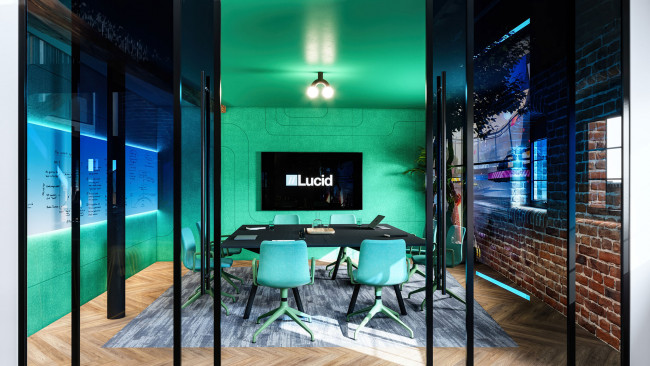
In the competitive world of game development, the "office" is no longer just a place to code – it is a critical extension of the studio’s brand and a powerful tool for talent acquisition. As design firms and forward-thinking studios push the boundaries of workplace aesthetics, we are seeing a shift toward dynamic, bold, and highly immersive environments. At the heart of this transformation is professional interior visualisation. As we have seen through our collaborations with visionaries from the design and build industry, the ability to visualise these complex, brand-led spaces before a single wall is built is no longer a luxury – it is a necessity. Double eleven headquarters designed by Oktra | CGI by Visioaxis The Rise of the Brand-Led Game Studio Game studios are masters of world-building, and they expect their physical environments to reflect that same creativity. Modern workplace design in the gaming sector is rarely "off-the-shelf." Instead, studios are increasingly prioritizing brand-led design. Whether it is incorporating iconic color palettes into architectural features or using sculptural lighting to mimic the atmosphere of a blockbuster title, the interior must scream "identity." We help translate these abstract concepts into reality by meticulously crafting: Dynamic Lighting: From neon-lit gaming sequences to soft, mood-enhancing ambient light, professional 3D visualizations capture the interplay of light and shadow, demonstrating how illumination defines the atmosphere. Materiality and Texture: An experienced 3D artist can make wood, glass, metal, and soft textiles look and feel authentic, allowing stakeholders to experience the space's tactile quality before construction. Beyond the Desk: Designing for Talent The "war for talent" is fierce. Top developers want workspaces that offer more than just a workstation; they want ecosystems that support their lifestyle. We are seeing a massive investment in leisure, recreation, and movement zones. Workplace design now centers on: Social Hubs & Game Zones: Creating multi-functional spaces that act as the heart of the office. Informal Seating: Designing flexible environments that encourage organic collaboration and "collision" between different creative teams. The "Return-to-Office" Incentive: By visualizing these spaces through high-fidelity CGI , studios can showcase the lifestyle benefits of their office, providing a tangible reason for teams to return to the hub, foster connection, and re-engage with the studio culture. First Touch game studio designed by Oktra | CGI by Visioaxis Aligning Vision Through Immersive Technology One of the biggest hurdles in complex commercial interior design is ensuring that architects, clients, and investors are all "seeing" the same thing. CGI acts as the common language. Why 360 VR Tours are the New Standard For game studios, 2D plans are simply not enough. 360-degree VR tours provide the most accurate way to portray design intent. They allow decision-makers to walk through the space digitally, experiencing the transition from high-energy game zones to tranquil meeting areas. This immersive approach eliminates ambiguity, reduces revision cycles, and ensures everyone is aligned on the spatial rhythm and atmosphere long before the fit-out begins. Facepunch studios headquarters 360 VR walkthrough Design by Oktra | CGI by Visioaxis Day and Night: Capturing Shifting Atmospheres Many game studio interiors implement different types of nonconventional light features to enhance the high-tech atmosphere. In these cases "day-to-night" transitions are mandatory so the client can envision how these elements translate in the evenings. This is essential for understanding how a space changes character – from the bright, collaborative potential of a daylight office to the dramatic, neon-infused focus of a night-time creative session. Conclusion The intersection of gaming culture and commercial interior design is one of the most exciting frontiers in the built environment. For studios aiming to attract top-tier talent and cement their brand identity, high-end CGI visualisation is the key to unlocking the true potential of their space. Are you looking to bridge the gap between your design concept and your client's vision? Let’s discuss how we can bring your next game studio project to life through photorealistic CGI and immersive VR tours.
Read more Showing 1-6 of 13 results