Lucid Games office interior
Lucid Games HQ explores how workspace design in the gaming sector is increasingly shaped by identity, culture, and atmosphere. Designed by Oktra, the project reflects a broader shift in office interior design, where environments are expected to communicate brand values as clearly as the work produced within them.
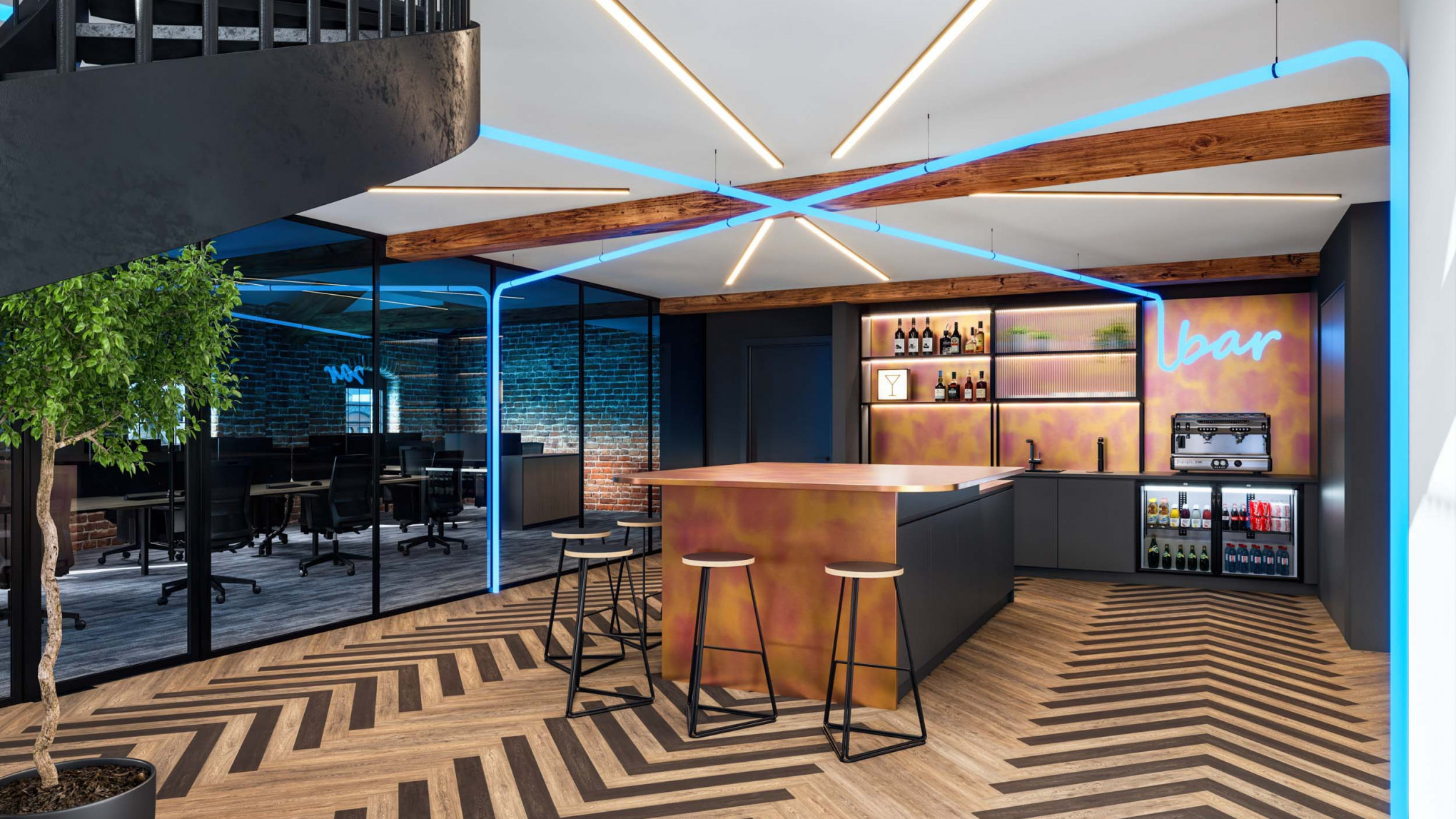
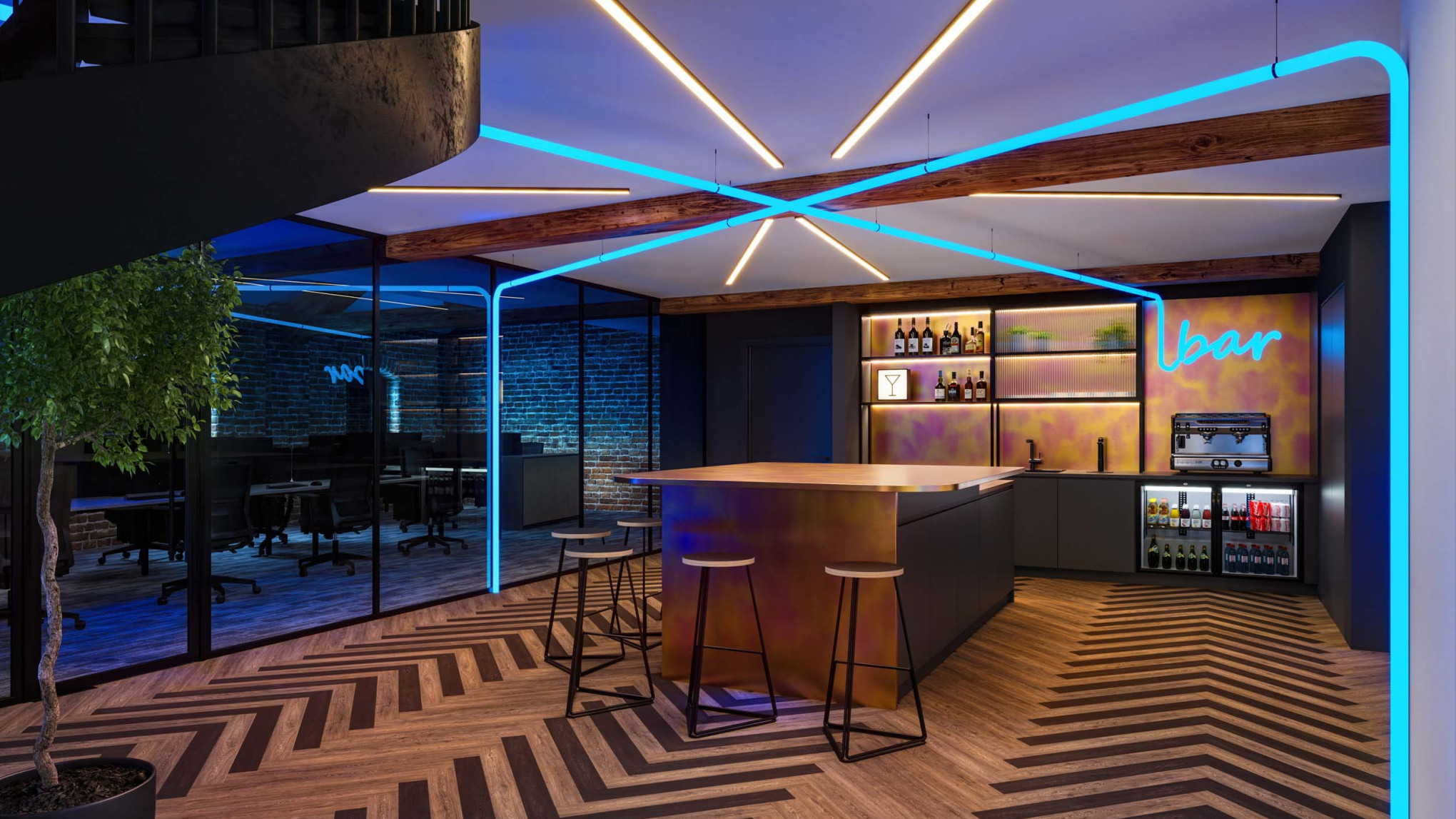
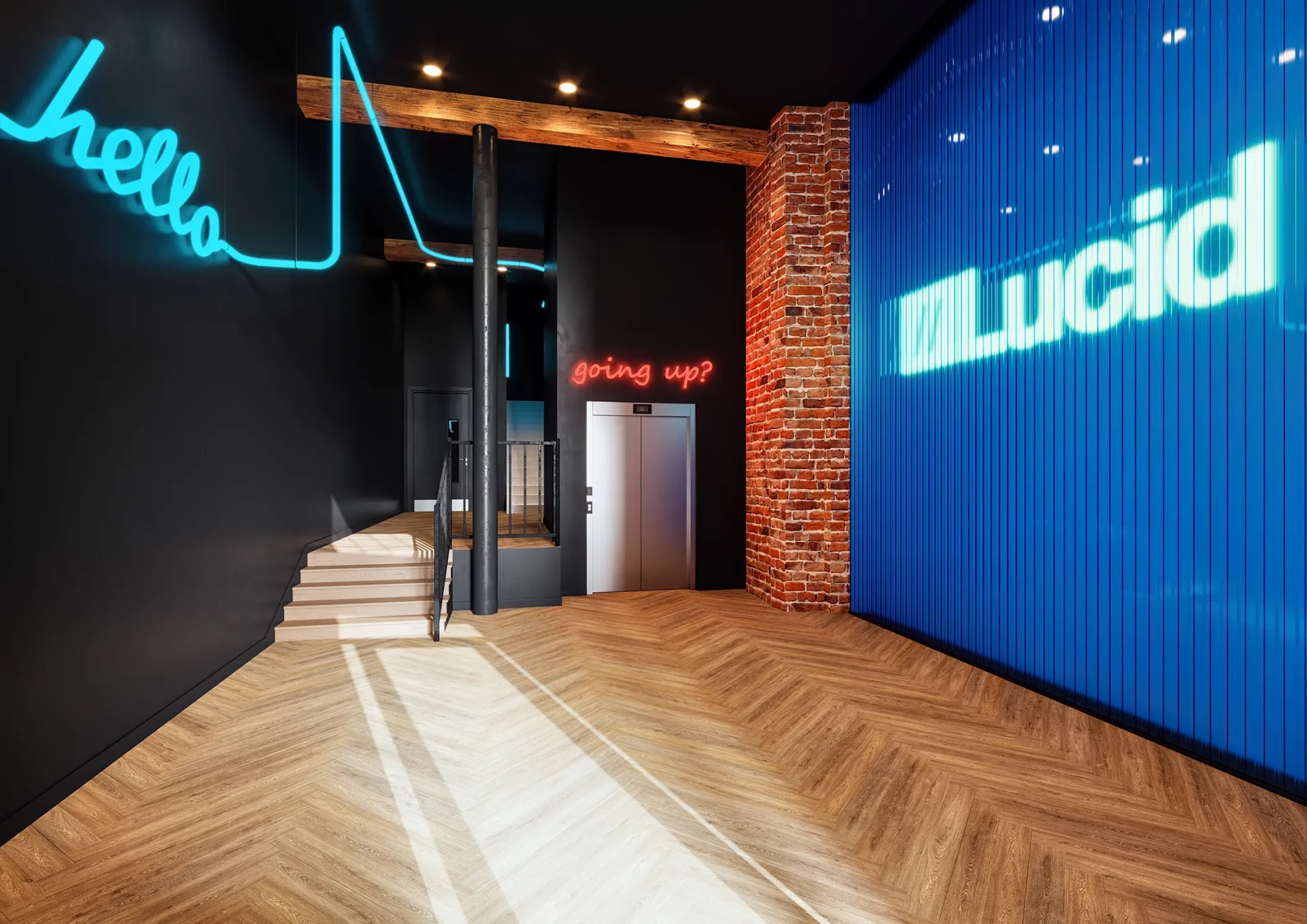
For this project, we delivered a set of high-end 3D visualizations for a game studio interior, focusing on how bold colour, lighting, and material contrast define the experience of the space. Unlike conventional office environments, game studio workspaces rely on visual energy and layered atmospheres, which can be difficult to interpret through drawings or static plans.
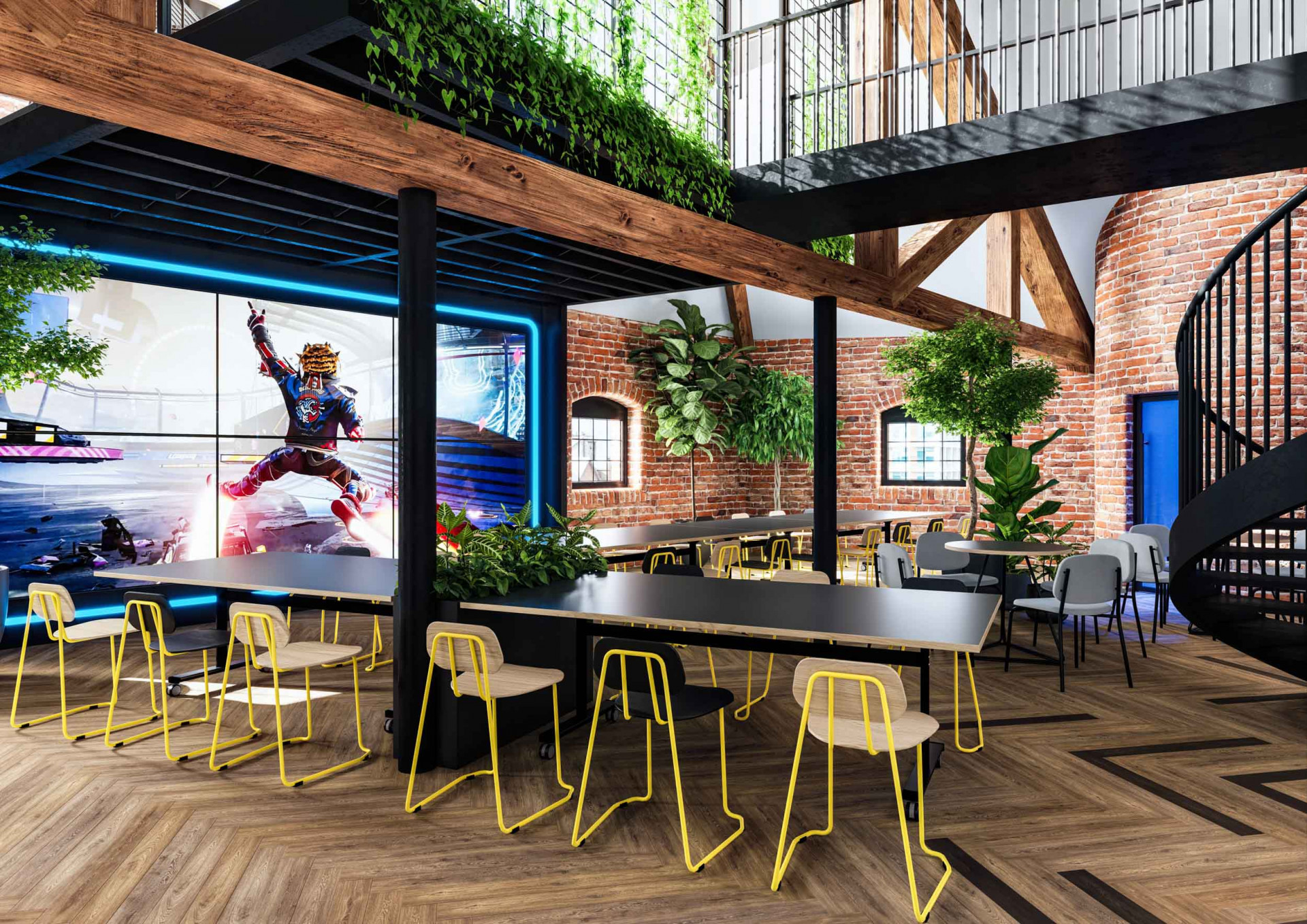
Our role was to translate these design decisions into a clear and accessible visual narrative. The combination of exposed brick, structural timber, neon accents, and contemporary workspace elements required careful control so that each component remained legible while contributing to a cohesive whole. Particular attention was given to lighting behaviour, as it plays a central role in shaping how the workspace is perceived and used.
To support this, we developed both daytime and night-time CGI scenarios. This allowed the design team and stakeholders to evaluate how the office interior transitions throughout the day — from a more neutral working environment to a more expressive setting where artificial lighting and brand elements become dominant. In game studio interior design, these shifts are essential for understanding how the space supports different modes of work, collaboration, and downtime.
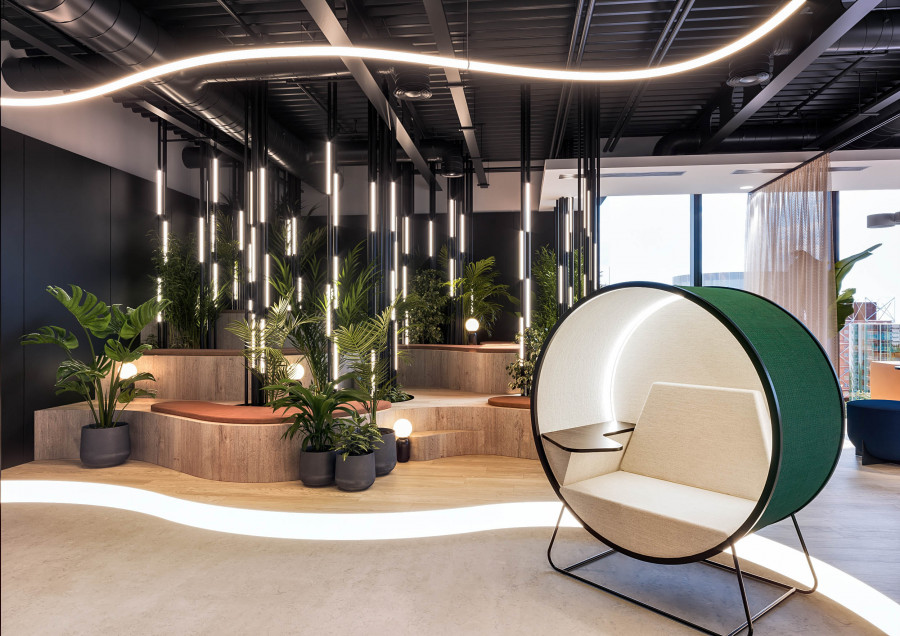
The project also reflects a wider trend in workplace design, where offices extend beyond desks to include social areas, breakout zones, and informal meeting spaces. These elements contribute to the overall experience of the workspace and are key in communicating how the environment supports team culture and interaction. Through architectural visualization, these spatial relationships become easier to assess and refine before construction begins.
For design and build teams, this type of office CGI serves as a practical tool for aligning stakeholders and presenting complex interior concepts with confidence. By illustrating lighting, materials, and spatial flow with precision, the visualizations help reduce uncertainty and support more informed decision-making throughout the project lifecycle.