3D Visualisation for Refurbishment Projects
Refurbishment projects across the UK design and build sector are inherently complex. Unlike new developments, they require working within existing buildings—each with its own constraints, unknowns, and limitations. From office refurbishments in London to commercial retrofit projects across the UK, the margin for error is significantly smaller, and the cost of misjudgement can be high.
This is where 3D visualisation plays a critical role in reducing risk throughout the project lifecycle.
In refurbishment, uncertainty often begins at the design stage. Existing structures introduce variables that cannot always be fully understood through drawings alone—irregular geometries, structural elements, ceiling constraints, and the interaction between new and retained features. Architectural CGI for design and build allows teams to test proposals within accurate spatial contexts, helping to identify potential conflicts before they reach site.
For architects, interior designers, and contractors, this early-stage insight is essential. 3D visualisation for refurbishment projects enables teams to assess layouts, circulation, and functionality within the realities of the existing building. This is particularly relevant in office fit-out and workplace design, where efficiency, compliance, and user experience must align within a fixed footprint.

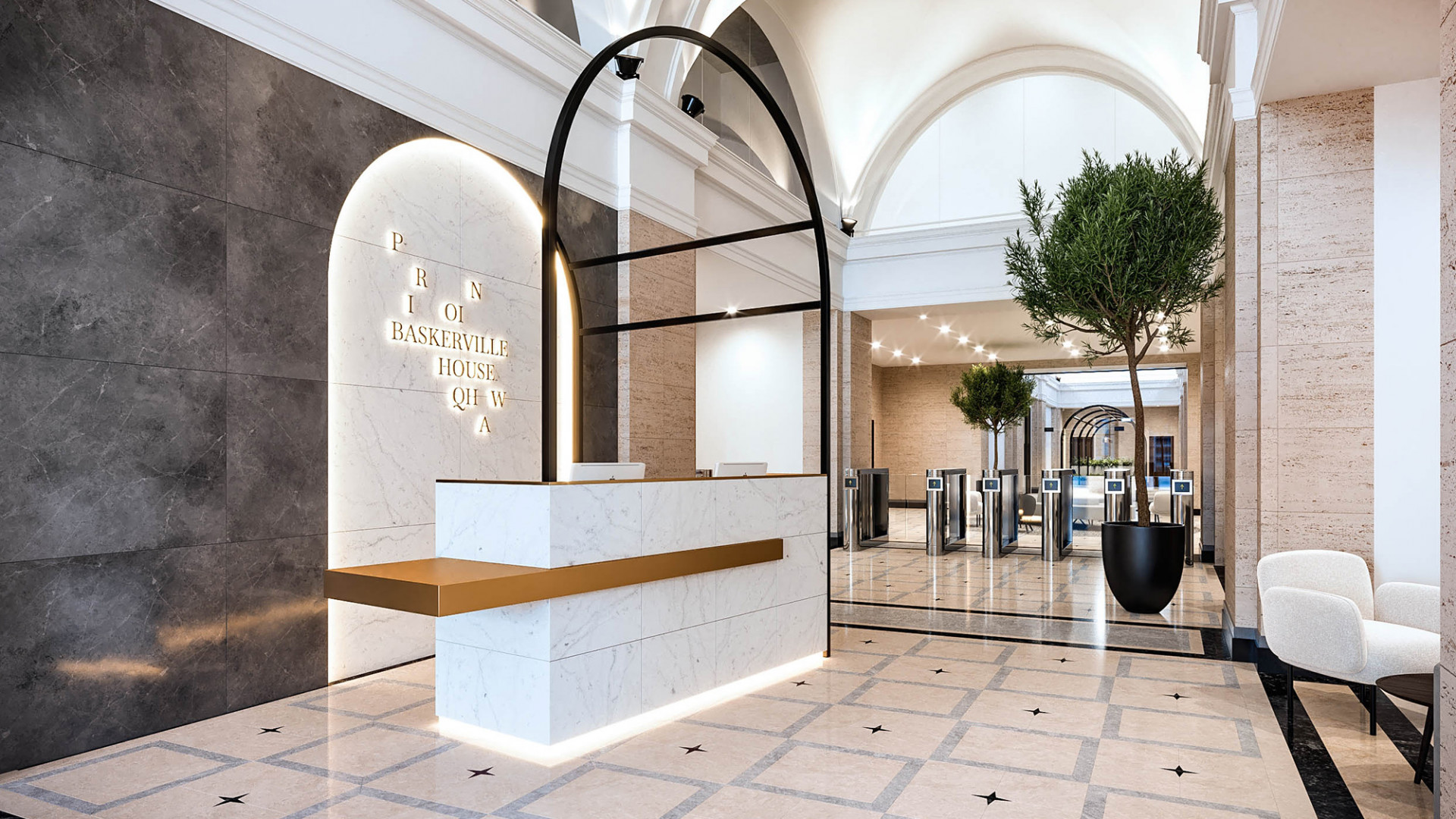
A workspace where heritage structure and contemporary office design work in quiet partnership;
Design by Thirdway, CGI by Visioaxis
Accuracy is one of the most significant factors in risk reduction. In UK refurbishment projects, even small discrepancies between design intent and on-site conditions can lead to delays, budget overruns, or last-minute compromises. High-quality workplace 3D visualisations, built from measured surveys and technical drawings, ensures that proportions, materials, furniture and architectural features are represented correctly. This level of precision supports better coordination between design teams, project managers, and contractors, reducing the likelihood of costly revisions during construction.
Lighting is another area where risk can be mitigated through CGI. Many existing buildings in the UK come with fixed orientations and window placements that directly affect natural light conditions. Through 3D visualisation, teams can analyse daylight performance and test artificial lighting strategies before implementation. This helps avoid underperforming spaces and ensures that the final environment meets both functional and aesthetic requirements.
Beyond design development, 3D visualisation reduces risk in communication. Refurbishment projects typically involve multiple stakeholders, including clients, developers, leasing teams, and investors. Misalignment at any stage can result in delays or changes that impact programme and cost. CGI provides a clear and consistent visual reference, helping all parties understand the proposal and make informed decisions with greater confidence.
For commercial real estate and office refurbishment in the UK, this is particularly valuable during pre-letting and marketing phases. Visualisations allow stakeholders to present upgraded spaces before construction is complete, supporting leasing strategies while reducing uncertainty around the final outcome.
Sustainability and heritage considerations also introduce additional layers of complexity. Many refurbishment and retrofit projects aim to retain existing structures to reduce embodied carbon, while also preserving architectural character in historically significant buildings. 3D visualisation supports this process by enabling teams to explore how modern interventions can be integrated without compromising the integrity of the original space. This reduces the risk of inappropriate design decisions and supports more responsible project outcomes.
Within the UK design and build industry, refurbishment is ultimately about managing constraints while delivering reliable results. 3D visualisation contributes to this by providing a practical framework for testing ideas, validating decisions, and aligning stakeholders before construction begins.
By reducing uncertainty at every stage—from concept development to client approval—CGI helps ensure that refurbishment projects move forward with greater control, fewer revisions, and a clearer path to delivery.
At Visioaxis, we don’t just showcase spaces -
we help our clients communicate design intent with clarity and precision