Winning Hospitality Bids: The Strategic Edge of High-End CGI
For premier hospitality design studios, the client presentation is a high-stakes moment where bespoke vision must meet commercial reality. In a market increasingly driven by experiential travel, unique concepts like remote modular retreats, biophilic wellness spaces, and the shift toward "resimercial" intimacy require more than 2D diagrams to secure approval.
While beautiful aesthetics are mandatory, high-end CGI has evolved into a strategic necessity. For pragmatic developers and asset managers, photorealistic visualization serves as a crucial risk-mitigation tool. It transitions the dialogue from speculative interpretation of a mood board to confident, logical decision-making.
Here is how leading studios are leveraging CGI to streamline operational costs, protect their design intent, and ultimately win competitive hospitality bids.
Eliminating the Physical Prototype: Digital Iteration Over Costly Mock-Ups
Historically, the only way a hospitality brand or developer could confidently sign off on a design standard was to build a full-scale physical "model room" or prototype area. This traditional workflow involved renting warehouse space, purchasing raw materials, and hiring contractors to construct a single test unit—a process costing tens of thousands of dollars and extending timelines by weeks.
CGI fundamentally eliminates this logistical bottleneck and massive financial strain.
Rapid Design Iteration: Before a single specification is written, studios can digitally "build" complex elements—such as custom herringbone wood patterning, intricate joinery, or specific acoustic ceiling textures—and test them instantly against varied color palettes.
Procurement and Change Order Reduction: By visualizing the exact integration of custom FF&E (Furniture, Fixtures, and Equipment) into the spatial architecture, studios ensure tighter coordination between the design and contractor teams. This photorealistic clarity dramatically reduces costly, late-stage change orders during construction.
Mastering Materiality and Light: Proving the Bespoke Vision
Top-tier hospitality projects often hinge on the meticulous selection of bespoke materials and how they respond to layered lighting schemes. Proving that a concept’s complexity is buildable—and will feel as intended—is crucial during a competitive pitch.
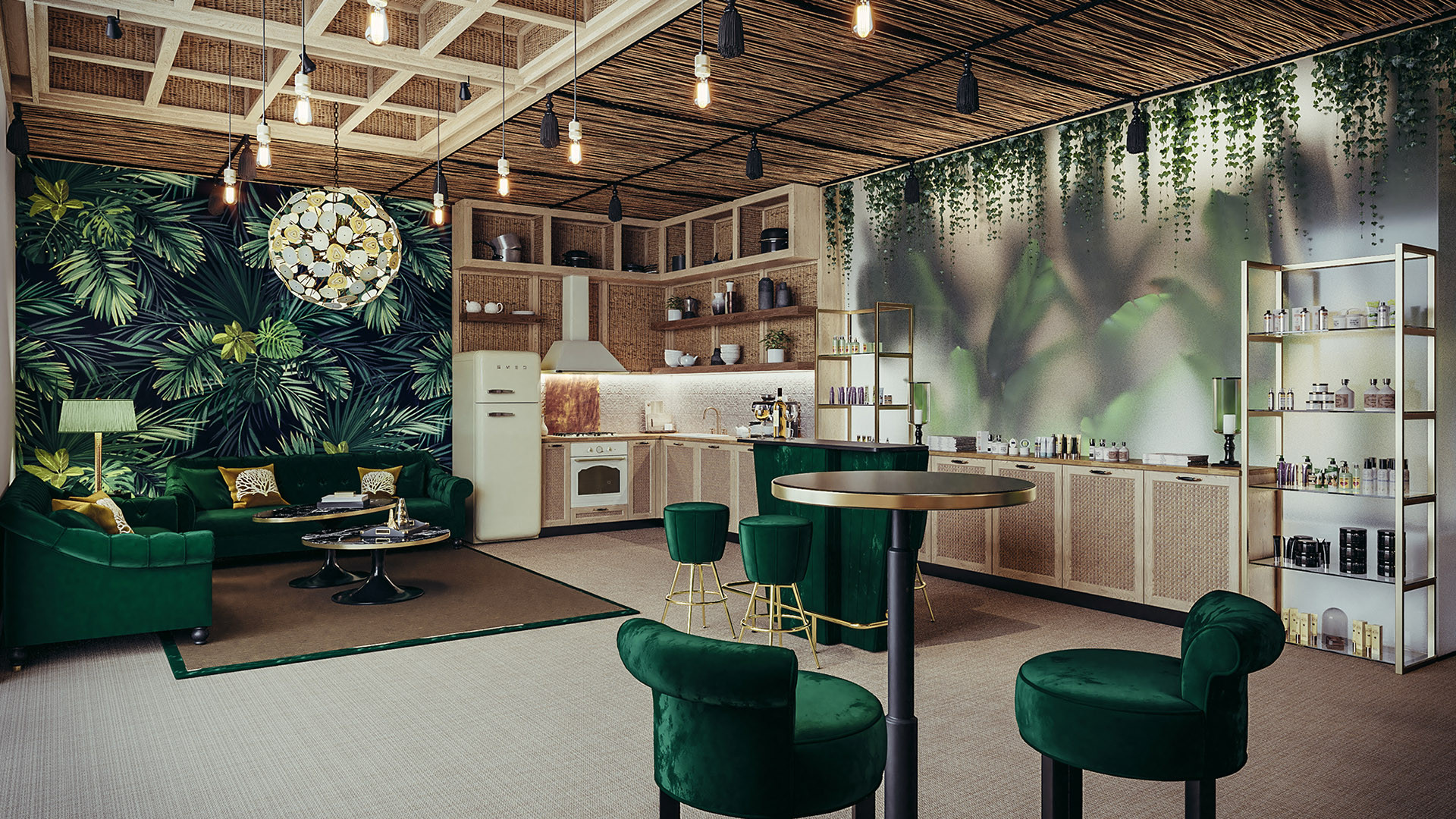
CGI excels where physical sampling fails, allowing studios to demonstrate material rigor and architectural atmosphere simultaneously. In wellness and F&B design, materiality is paramount. Photorealistic CGI accurately simulates how complex textures—like varied wood grains, rattan weaves, and custom stone patterns—absorb and reflect light.
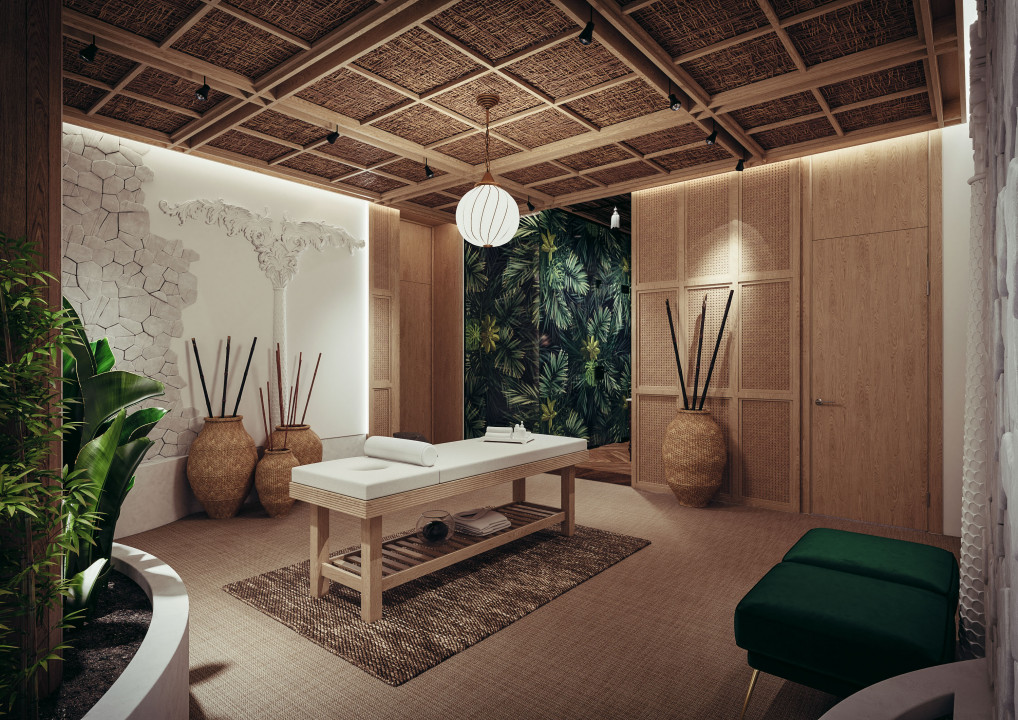
Case Study: Totalzone Wellness Center
Design by Studio Goev | CGI by Visioaxis
This capability is essential for studios selling complex biophilic designs, ensuring developers can see how architectural lighting interacts with organic textures and layered greenery long before a single trade is on-site.
Selling the Experiential Journey: Exterior Immersion and Light Transition
In experiential hospitality, the destination is the product. Static interior shots are insufficient for selling a sense of arrival or the integration of a property into a unique geography. Leading studios utilize CGI, including 360-degree views, to virtually place stakeholders on the property.
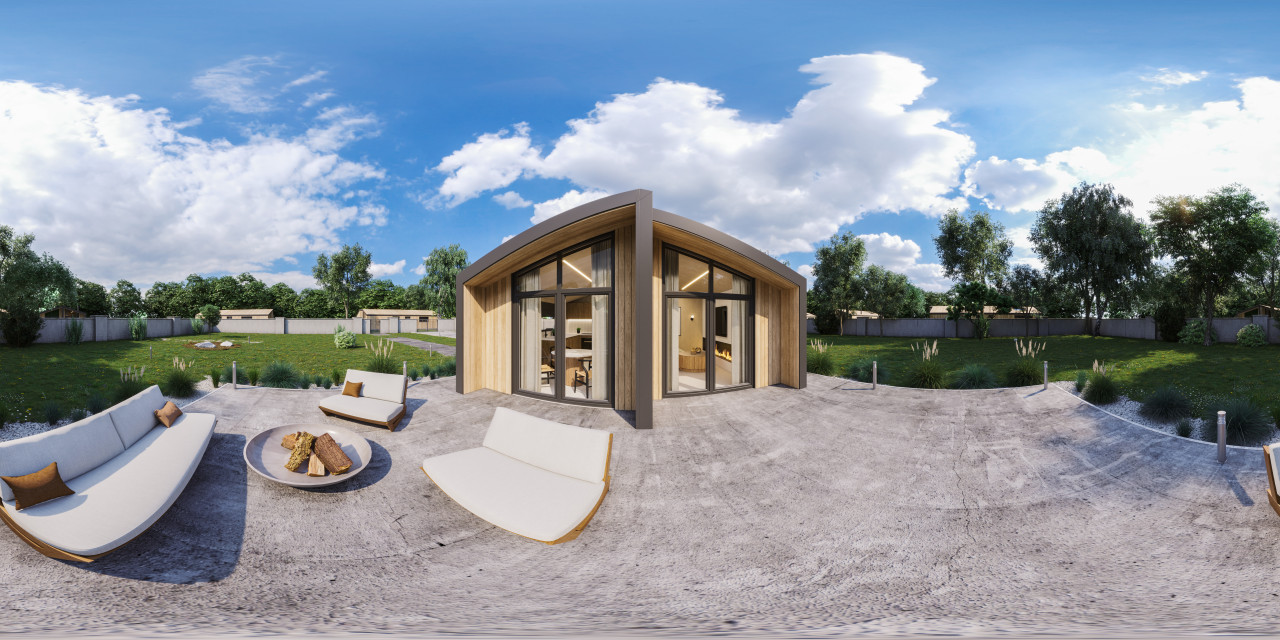
Case Study: The Kalpana Lodge 360 immersive VR tour
Design by Benussi Design | CGI by Visioaxis
Crucially, CGI allows studios to present "day-to-night" light transitions, demonstrating how the architecture responds to natural light patterns and showcasing the intended ambient mood for evening operations.
Utilizing CGI to simulate environmental context and critical transitions is essential for selling the immersive nature of boutique or remote retreats. It immediately communicates how the exterior frames the natural environment, proving to stakeholders that the property will offer the seclusion and exclusivity that modern guests demand.
The "Resimercial" Demand: Validating Intimacy in Commercial Spaces
A dominant, long-term trend in hospitality is "resimercial" design—the mandate to make commercial public areas and guest suites feel like bespoke, curated luxury homes rather than transient corporate environments.
This shift presents a communication challenge. Developers must be assured that "cozy" residential concepts maintain commercial function, durability, and brand standard rigor.
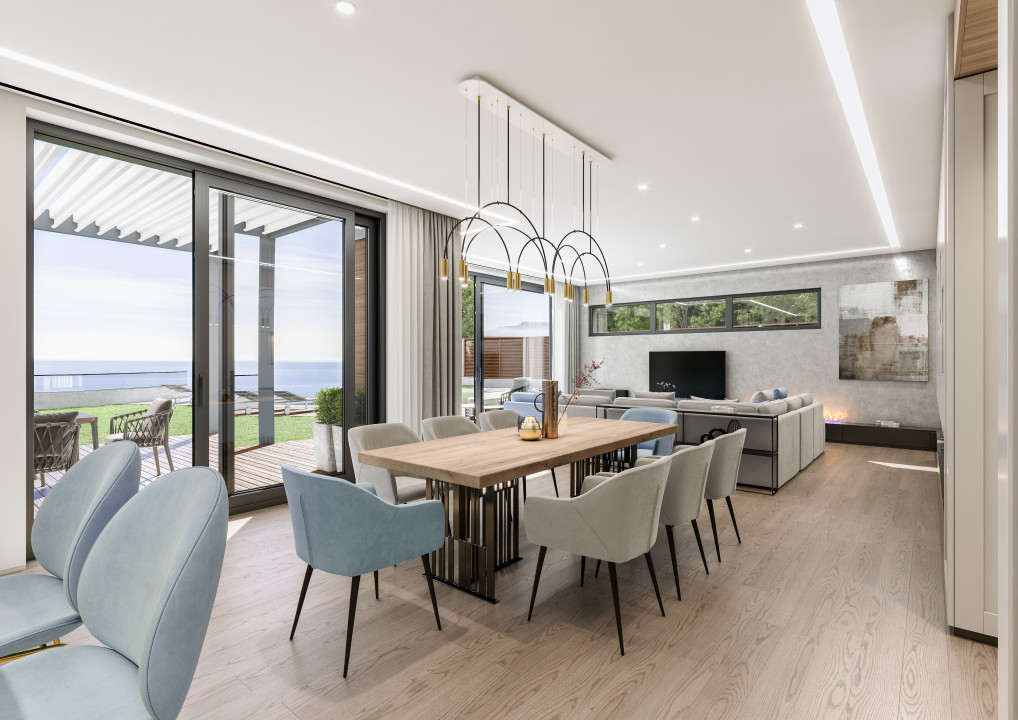
Case Study: Private Seaside Home
Design by Studio Hi | CGI by Visioaxis
By leveraging high-end residential expertise, studios use CGI to showcase that intimacy does not equate to a lack of commercial sophistication. CGI captures the nuances of residential warmth—the cozy glow of integrated lighting, the soft texture of layered textiles, and the inviting aesthetic of curated joinery—proving to the client that the concept will attract the modern guest’s desire for a personalized, curated escape.
Conclusion: Securing the Bid with Emotional and Logical Consensus
Ultimately, hospitality bids are won when stakeholders are simultaneously confident in the design vision and assured of the commercial execution. In a competitive market where every design decision is scrutinized against budget and guest experience, high-end CGI provides both.
By replacing expensive physical prototype costs with rapid digital iteration and validating complex architectural intent with photorealism, CGI allows design studios to pitch with authority, minimize operational friction, and secure a quicker stakeholder consensus.
Ready to Win Your Next Hospitality Pitch?
Don't leave your next bid to chance with flat 2D plans. Give your clients the immersive, resimercial, and experiential visualization they demand while protecting your studio's time and budget.
At Visioaxis, we don’t just showcase spaces -
we help our clients communicate design intent with clarity and precision